
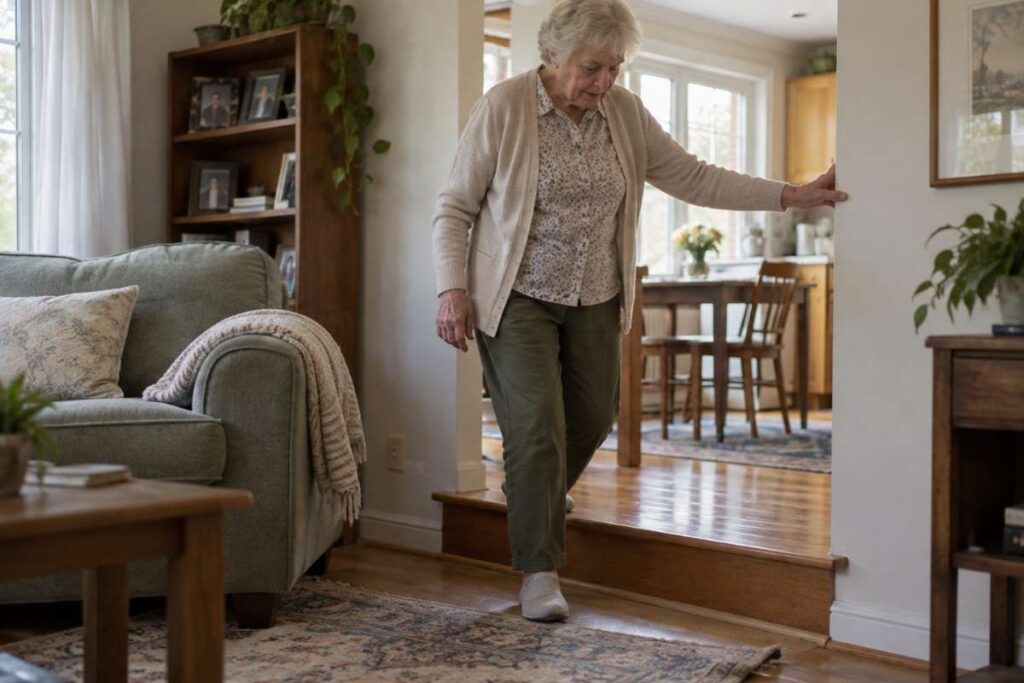
More than two thousand years ago, Cicero wrote that “no one is so old as to think that he cannot live one more year.” We compared the AARP survey with research on home accessibility. The two sources point to a practical tension: most older adults want to stay put, but their homes may require changes.
Most older Americans want to stay in their homes for as long as possible. The problem is that a home that suited someone perfectly at 45 may require a different layout or several carefully chosen changes at 65. According to an AARP Home and Community Preferences Survey, 75% of Americans over age 50 want to remain in their current home, and 43% already believe they will need to make some changes so they can continue living there later in life.
Taken together, those two numbers describe aging in place much better than the desire to remain at the same address alone. So, people generally want to stay in their own homes, but the home itself may eventually require a different layout or better access to services outside the home.
Let us take a closer look at the subject!
A Home You Have Lived in for Decades Can Become Less Suitable Over Time
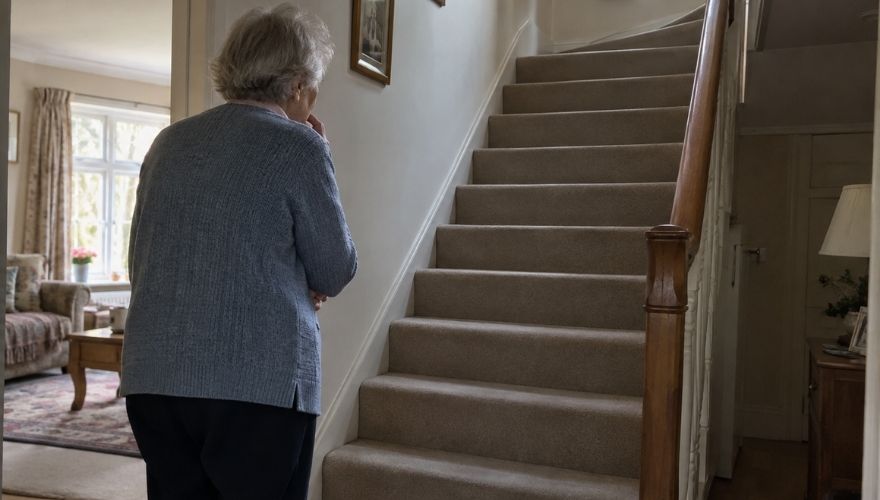
The Census Bureau offers a useful way to assess a home. Its analysis focused on a step-free entrance, a bedroom on the main floor, and a full bathroom on the same level. The Census looked at three basic features: a step-free entrance, a bedroom on the first level, and a full bathroom on the same level. About 40% of U.S. homes met all three criteria.
Stairs therefore deserve attention long before a major renovation. If they lead to the only bedroom or full bathroom, a large part of daily life depends on access to the upper floor.
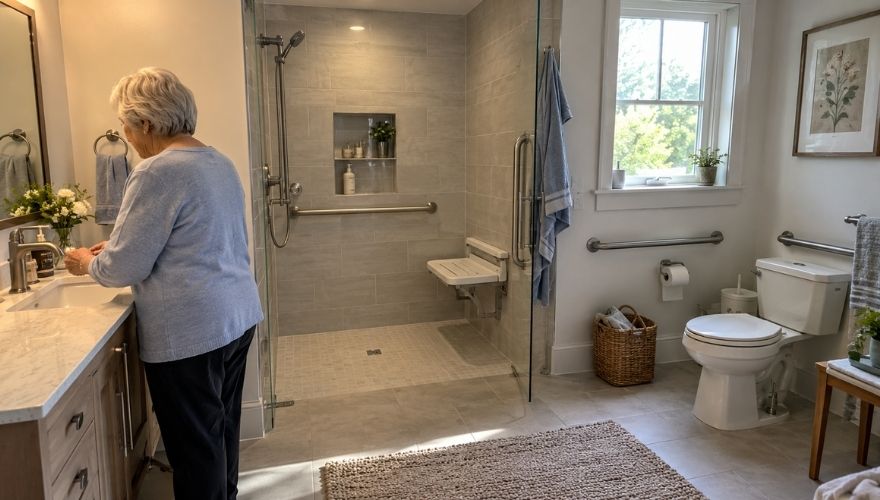
The bathroom is another important space. Sturdy grab bars next to the toilet or shower can make the space easier to use. Flooring with good traction reduces added risk on a wet surface.
One Georgia Tech study on home maintenance included 44 older adults who lived independently at home. Their average age was just over 76. Researchers recorded 316 comments about tasks that had become more difficult. A large share involved cleaning and outdoor work.
Help from another person was the most common solution, but not everyone has the ability to afford it.
Family circumstances can also change the picture. Many people enter retirement with a spouse. Years later, one member of the household may be left living alone.
Home Changes to Consider Before a Major Renovation
Start with the obstacle you face today. A grab bar or improved stair access may deserve attention before a costly renovation.
| Stairs | Sturdy handrails on both sides and better lighting |
| Bedroom | Move it to the ground floor if the layout allows |
| Bathroom | Grab bars near the toilet and in the shower area |
| Floors | Remove small rugs and secure larger floor coverings |
| Maintenance | Arrange reliable help in advance for yard work and household tasks |
| Transportation | Check available services and connections to stores or medical care |
Age-in-Place Communities Are Becoming an Increasingly Popular Option
Such communities offer another model. But let us first look at what an age-in-place community is.
Age-in-place communities are neighborhoods or housing models that help older adults live independently in their own home or the same community for as long as possible.
They usually offer:
- homes without stairs or with few barriers;
- wider doorways and accessible bathrooms;
- stores, doctors, and other services nearby;
- in-home help when needed;
- transportation for older adults;
- social activities and shared spaces.
For a closer look at how a home can be adapted for aging in place, Nick explains in the video below how simple design changes can make a home more accessible, comfortable, and practical for everyone.
What the Data Says When We Compare the Options
Geography makes a major difference. We found that location also matters. A home with an accessible layout is much more common in some regions than in others. The U.S. Census Bureau found that about 62% of homes in the West South Central region have basic aging-ready features, compared with about 20% in New England.
Part of the reason lies in the type of housing: single-level homes are much more common in the South and West, while at least 70% of homes in New England and the Mid-Atlantic regions have multiple stories. Census analysis of regional differences therefore shows that the decision to stay or move also depends on the type of housing stock available where you live.
For someone who already has a single-level home, adaptation can often begin with smaller changes. An owner of a multi-story home with a large property may face a completely different calculation.
When to Review Your Home and Future Support Needs
Our advice is to assess the home before a health or mobility change forces a quick decision.
Check access to essential rooms, likely repair costs, nearby support, and the realistic option to move.