
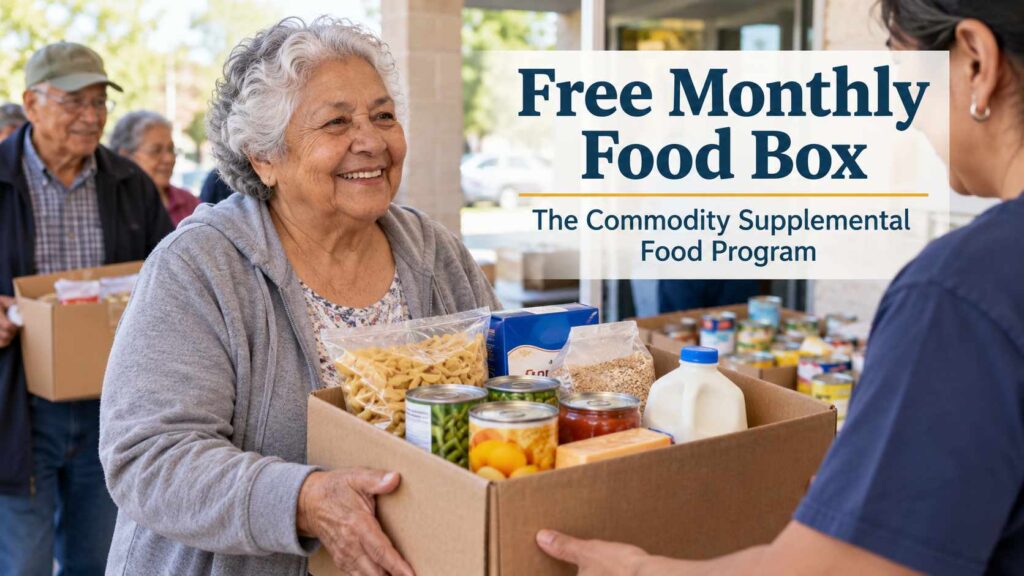
USDA provides food and funding to states and Tribal Organizations. A local agency then checks who qualifies and organizes distribution. The box usually contains shelf-stable foods, such as canned fruits and vegetables, milk or cheese, cereals and pasta, as well as some source of protein.
It is a federal USDA program for older adults with lower incomes, and the monthly food box is distributed by a participating state or local organization.
We recommend three initial checks for CSFP: age, applicable income limit, and local program availability. All three matter before you expect a monthly food box.
People Age 60 and Older Can Apply
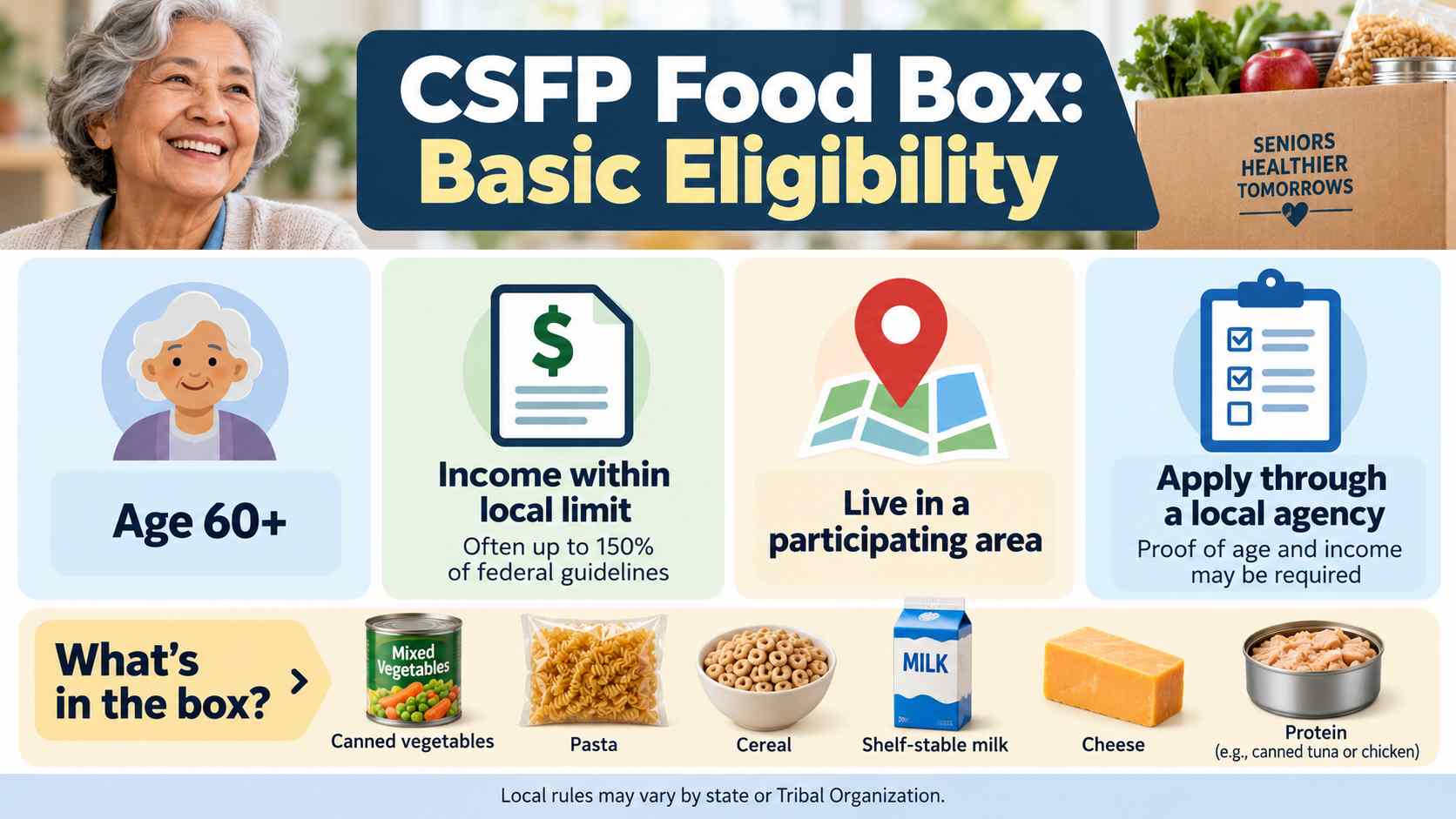
The Commodity Supplemental Food Program is currently intended for older adults. The federal minimum age is 60, and the local agency verifies age during the application process.
If you are 60 or older, you meet the age requirement. Income is checked separately against the limit used by your state or Tribal Organization.
Age determines which group the program serves, and local income rules determine who within that group can receive a USDA food box.
Older Adults With Income Below a Certain Limit May Qualify for a Food Box
Check the income limit your state or Tribal Organization actually uses. The federal ceiling does not guarantee that every local program applies the maximum.
For 2026, the USDA income guidelines provide the following amounts at 150% of the federal poverty level for the 48 contiguous states and the District of Columbia.
| Household Size | Annual Income | Monthly Income |
| 1 | $23,940 | $1,995 |
| 2 | $32,460 | $2,705 |
| 3 | $40,980 | $3,415 |
| 4 | $49,500 | $4,125 |
| Each Additional Household Member | +$8,520 | +$710 |
The table shows 150% of the Federal Poverty Income Guidelines for 2026. A state may use a lower CSFP limit.
Source: USDA Food and Nutrition Service.
How Does It Work in Areas Covered by the Program?
CSFP operates through state and local organizations, so where you live is part of the eligibility review. A state agency may designate a service area, and a local partner then handles applications and distribution for people who live within that area.
The Commodity Supplemental Food Program is federally funded, but distribution is organized locally.
New Hampshire provides a good example of how the program works in practice. The state’s Supplemental Food Program for Seniors serves residents who are at least 60 years old and meet the income requirements. Food boxes are then picked up through the organization that operates the program in their area.
What Matters When You Apply for the Program?
Some agencies may verify income through documentation you already use for another program. State rules may also include an additional assessment of nutritional risk status. Before your visit, ask the local agency which documents count as proof and which income period it reviews.
Also confirm where and when you can collect the box. Ask about delivery options if travel is difficult. For someone who no longer drives, the location and distribution schedule can determine how accessible the Commodity Supplemental Food Program really is in everyday life.
What Else Should We Know Beyond the Main Features?
The Senior Farmers Market Nutrition Program is often mentioned alongside CSFP. It is a separate USDA program for older adults with lower incomes who purchase locally grown produce from approved vendors.
The Senior Farmers Market Nutrition Program generally has a minimum age requirement of 60. The maximum income limit can reach 185% of the federal poverty guidelines, so the program has a different income eligibility framework than CSFP.
The Type of Assistance Is Also Different
The Senior Farmers Market Nutrition Program provides a benefit for purchasing approved fresh produce during the local season. The Commodity Supplemental Food Program provides a USDA food box according to the local distribution schedule.
In some states, participation in CSFP may help verify eligibility for the Senior Farmers Market Nutrition Program. If both food programs operate in your area, ask the local agency if participation in one can help verify eligibility for the other.
For someone who qualifies for both programs, the combination is quite specific: a monthly USDA food box through CSFP and a seasonal benefit through the Senior Farmers Market Nutrition Program. The local agency can confirm when both programs operate and how to apply.
And Finally…
Start with your age and current income. Then identify the local CSFP administrator and confirm its income limit, document requirements, and distribution schedule.
Next, contact the agency for the document checklist and pickup schedule. Ask about other seasonal food programs in the area.
If you meet the stated rules, ask the local administrator about available places, waitlists, and the next distribution date.