

At 65 in the U.S., you become eligible for Medicare. On the surface, it seems like an ideal arrangement.
We checked the 2026 Medicare figures against the official rules. Turning 65 can change how you receive health coverage, but premiums and other expenses do not disappear.
Medicare can significantly change your healthcare budget. Still, costs remain spread across premiums, deductibles, coinsurance, medications, and supplemental coverage. For someone approaching 65, the real calculation starts with one question: how much will healthcare cost after entering Medicare?
Our review of the current Medicare rules identifies several costs and enrollment details worth a closer look:
- Most people get Part A without a monthly premium, but hospital costs still remain.
- The standard Part B premium for 2026 is $202.90 per month.
- Part B has an annual deductible of $283, and for many covered services, the beneficiary then pays 20% of the Medicare-approved amount.
- Original Medicare has no general annual limit on out-of-pocket costs.
- People who work past 65 may have different enrollment rules because of coverage through current employment.
- Some people also pay for Part A because they do not have enough Medicare-covered work history.
The figures are current for 2026 according to official data from Medicare.gov.
Your First Medicare Bill Starts With Parts A and B

The term premium-free Part A probably explains much of the confusion around costs after age 65.
Medicare.gov says that most people pay a $0 monthly premium for Part A because they or their spouse paid Medicare taxes through work for long enough, usually at least ten years. That is why the term premium-free Part A is used.
The monthly premium is only one part of the bill. For a hospital stay, Part A has a $1,736 deductible per benefit period in 2026. After that, the cost is $0 per day for the first 60 days. From day 61 through day 90, the beneficiary pays $434 per day, while lifetime reserve days from 91 through 150 cost $868 per day. After day 150, the beneficiary pays the full daily cost.
One detail deserves special attention. The Part A deductible is tied to a benefit period, so more than one such period can occur during the same calendar year. Medicare does not set an annual maximum on the number of benefit periods.
Part B then adds a regular monthly cost. The standard premium for 2026 is $202.90 per month, or about $2,435 per year. People with higher incomes may pay a higher premium through an income-related adjustment. The annual Part B deductible is $283, and after that, the beneficiary usually pays 20% of the Medicare-approved amount for many Medicare-covered services.
At that point, the bill already looks quite different from the simple idea of “free Medicare.”
The Real Question Is What Medicare Leaves You to Pay
For 2026, the basic calculation looks like this, and the table shows another difference that often disappears behind the term premium-free Part A.
| Cost | 2026 Amount |
| Part A premium for most people | $0 per month |
| Part A premium if a person lacks enough Medicare-covered work | $311 or $565 per month |
| Part A deductible | $1,736 per benefit period |
| Standard Part B premium | $202.90 per month |
| Part B deductible | $283 per year |
| Typical Part B coinsurance | 20% of the Medicare-approved amount |
| Original Medicare annual out-of-pocket limit | No general annual limit |
KFF analyzed the exact situation of a person turning 65 without qualifying for premium-free Part A. In that situation, Marketplace coverage and premium tax credits may remain part of the calculation, under the conditions KFF describes for people who have to pay for Part A.
In other words, turning 65 opens the door to Medicare rules. Personal work history determines part of the cost that comes next.
Working Past 65 Changes How You Need to Read Medicare Rules
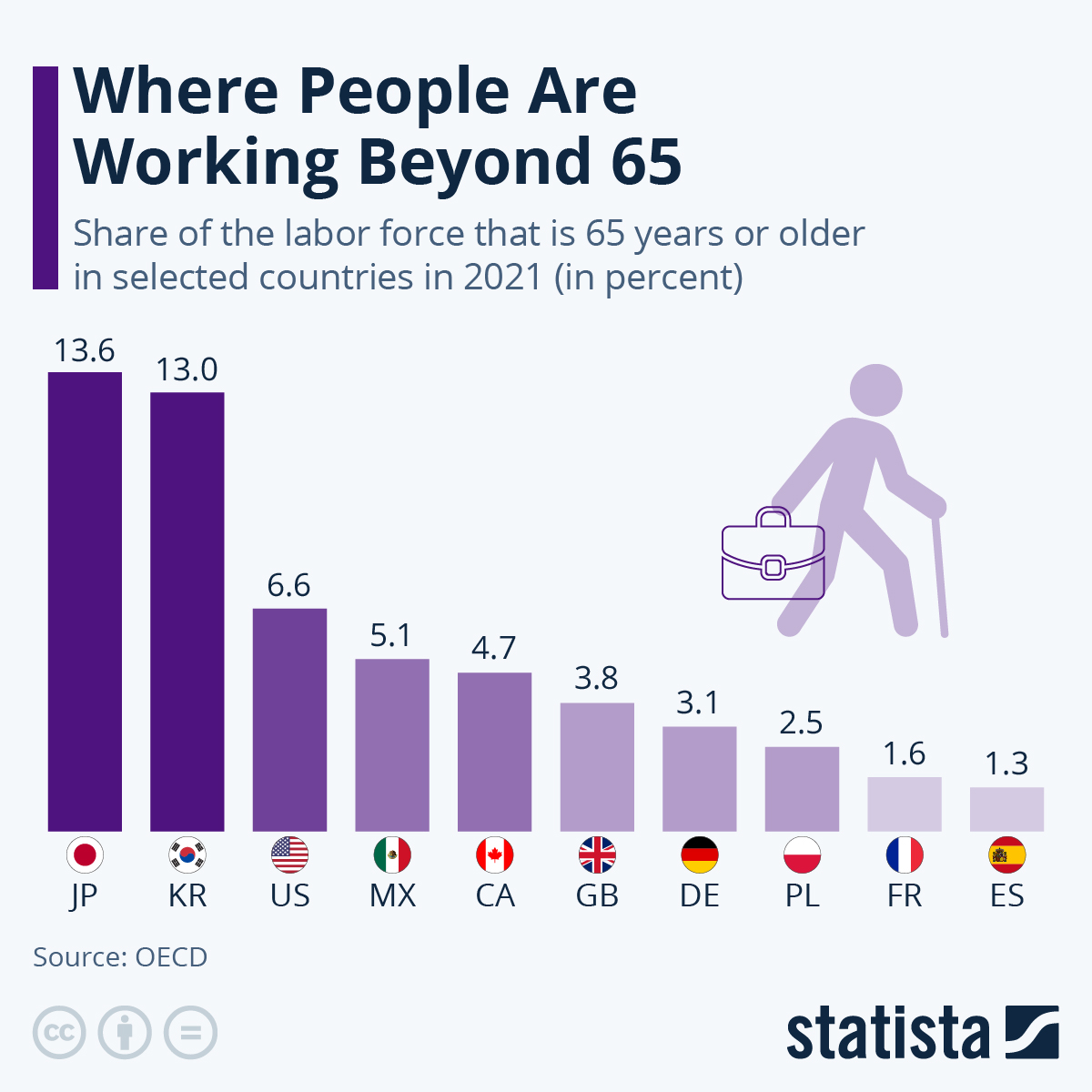
People who remain employed past age 65 often have another layer of health coverage. That is where the enrollment date becomes just as important as the price itself.
Medicare.gov has a separate section for people who work past 65 and advises them to check with their employer about how employer coverage works with Parts A and B. The type of coverage and employment status determine the next step.
Active Employer Coverage Can Open a Later Part B Enrollment Window
A person who has group health coverage based on their own current employment or a spouse’s current employment may, in certain circumstances, use a Special Enrollment Period for Part B.
After employment ends or that coverage is lost, an eight-month Special Enrollment Period begins. Medicare says that during this period, a person can enroll in Part B and usually avoid a late enrollment penalty.
The date therefore deserves a place next to the premium amount. Delaying Part B can increase the premium by 10% for each full 12-month period during which the person could have had Part B. That surcharge usually remains attached to the premium for as long as the person has Part B.
COBRA and Retiree Coverage Are Treated Differently
Coverage through a former employer can look like a simple continuation of the insurance you had at work. Medicare treats COBRA differently when it comes to the Part B enrollment deadline.
The eight-month Special Enrollment Period begins when active employment or qualifying coverage based on that employment ends. Choosing COBRA coverage does not move the start of that period. Medicare specifically warns people to keep track of the Part B deadline even during COBRA coverage.
Retiree coverage may also require coordination with Medicare. Medicare advises beneficiaries to check with the benefits administrator about how retiree insurance works with Parts A and B because the policy may expect Medicare to pay first.
Federal employees provide another clear example of a special rule. The Office of Personnel Management explains FEHB rules when an employee turns 65. Active federal employees can continue FEHB coverage, and FEHB generally remains the primary payer during active employment. OPM also states that all Part B beneficiaries pay a premium.
Examples like that show why turning 65 should be considered together with employment status and existing insurance.
What Else About This Topic Can Be Interesting

What exactly will I still have to pay when Medicare starts?
For some people, the answer will be the standard Part B premium and relatively small additional costs. For others, the bill can include deductibles, coinsurance, prescription coverage, Medigap, or even a Part A premium.
A few questions quickly show the difference.
If Part A Costs $0, Does That Mean Hospital Care Costs $0?
No. Premium-free Part A refers only to the monthly premium. The Part A deductible for 2026 is $1,736 per benefit period, and a longer hospital stay can also bring daily coinsurance costs.
Can Someone Have Medicare and Still Receive a Large Medical Bill?
Yes. Original Medicare has deductibles and coinsurance, and it has no general annual out-of-pocket maximum.
Can Turning 65 Make Health Insurance More Complicated?
For some people, yes. Employer coverage, COBRA, retiree coverage, Part B deadlines, Part D, and Medigap can all change what happens next.
The key distinction is easy to miss: employer coverage, COBRA, and Medicare deadlines may change the cost of coverage even after age 65.
At 65, healthcare does not become free.
The way you pay for it changes.