

A heating bill can rise during winter in the same month when Social Security stays unchanged, and a summer electricity bill in warmer states can put similar pressure on a household budget. For retirees with limited income, such a change can easily take money already set aside for food or healthcare costs.
If your utility bill has become difficult to pay, we suggest that you check LIHEAP first. Your state or local agency can explain the income rules and available assistance. After that, there are energy-efficiency programs, phone and internet assistance, local emergency aid, and special plans offered by utility companies.
We would compare the available programs in the following order:
- LIHEAP: help with heating and cooling bills.
- Weatherization Assistance Program, WAP: home energy-efficiency improvements that can reduce future bills.
- Lifeline: a monthly discount on phone or internet service for eligible households.
- Community Services Block Grant, CSBG: local help with utility bills and other basic expenses through Community Action Agencies.
- PIPP: in some states, it links energy bills to household income for more predictable monthly costs.
- Utility company assistance: hardship funds, extended payment plans, and special rates offered by utility companies themselves.
For Heating and Electricity Bills, LIHEAP Is the Strongest Starting Point

The Low Income Home Energy Assistance Program, or LIHEAP, is intended for lower-income households that spend a large share of their budget on energy. Federal funds go to states, territories, and Tribal organizations, while local rules determine who can receive assistance and how much it can be.
The program can cover part of heating or cooling costs, and funds are also used during energy-related emergencies. Some administrations direct part of the money toward weatherization or smaller improvements tied to household energy efficiency.
We put LIHEAP first because it directly addresses eligible heating and cooling costs, although local rules determine the amount and availability of help.. During fiscal year 2024, LIHEAP helped nearly 6 million households, and about 2.5 million of those households included an older adult. More than 90% of recipient households included an older person, a young child, or a person with a disability.
The official LIHEAP eligibility system guides users through exactly that type of check.
One feature deserves attention: LIHEAP considers energy burden, or the share of household income used for energy. A $250 bill has a very different effect at $2,000 and $6,000 in monthly income..
| Measure | Before LIHEAP Assistance | After LIHEAP Assistance |
| Average share of income spent on energy | 15.5% | 11.6% |
| Change in energy burden | 3.9 percentage points lower | |
| Average percentage reduction in energy burden | 25.4% |
When High Bills Return Every Season, Weatherization Is an Excellent Option
The program is called the Weatherization Assistance Program, or WAP, and it focuses on home energy efficiency. The U.S. Department of Energy runs the program through state and local organizations, and priority groups include older adults and households with high energy burdens.
According to Department of Energy data, the program serves about 32,000 homes each year, while households save at least $372 per year on energy on average after the work is completed.
DOE gives another useful comparison alongside that figure: lower-income households spend about 14% of their income on energy on average, compared with about 3% for higher-income households. That is where WAP becomes especially relevant for older homeowners, because energy efficiency affects a cost that returns every month.
For Senior Benefits, there is an important difference compared with LIHEAP. In a home that has had high energy use for years, WAP plays a larger role because it changes future energy consumption rather than the size of one seasonal bill.
Phone and Internet Have a Separate Assistance Program
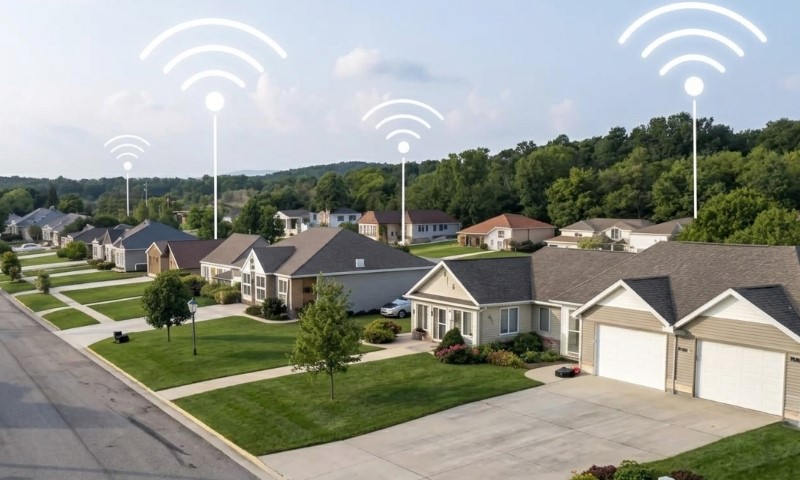
Phone and internet now hold a regular place in the household budget, especially for retirees who use telehealth or online access to Social Security and Medicare services.
The federal Lifeline program provides eligible households with up to $9.25 per month for internet or bundled service, while eligible users on qualifying Tribal lands can receive up to $34.25 per month.
For Senior Benefits, that amount may seem modest compared with help for a large heating bill, but the standard discount can reach $111 over a year. For someone who carefully budgets every Social Security check, a regular monthly discount has real value.
If you use the internet to apply for other Senior Benefits, manage a Medicare account, or stay in touch with family, this bill deserves attention as well.
When the Problem Involves Several Bills, a Local Agency Can Open More Doors
The federal Community Services Block Grant funds about 1,000 local organizations that provide services related to utility bills, housing, transportation, and emergency assistance.
There is no single national amount that applies to everyone, because local organizations decide how to use funds based on community needs. For that reason, Senior Benefits through CSBG can make sense for a household trying to solve several different bills at the same time.
If LIHEAP covers part of the energy cost, the same local organization may know about an additional fund that covers a different need.
Fixed Income and Seasonal Bills Can Sometimes Be Connected Through PIPP
In some states, Percentage of Income Payment Plan programs, known as PIPP, are available. Their rules depend on the state and local energy system, and the basic model links the monthly energy obligation to the income of an eligible household.
How Can You Get the Most From These Senior Benefits Programs?
You will get the most value from these Senior Benefits programs if you look at them together and organize applications according to the bill that currently creates the biggest problem.
It is also important to check programs available only in your state or through your utility company. PIPP, hardship funds, and payment plans often depend on local rules, so the same person may have access to more Senior Benefits options than federal programs alone show.
If most income comes from Social Security, it is also useful to see how COLA affects retirees’ real expenses, as well as our guide to Senior Benefits by type of expense.
Make a short list of your largest bills. Match each expense to the relevant program, then check the local eligibility rules one by one.